Posts

Facebook Sets the Benchmark on Carbon Footprints

Image
A company's c arbon foot print is an important part of their branding. It  means the  total amount of greenhouse gas produces by a person, company, event, product or organization. The carbon footprint can be measured by undertaking a GHG emissions assessment. Once the size of a carbon footprint is known, a strategy can be devised to reduce it, e.g. by energy saving, technological developments, better process and product management. Facebook has revealed the carbon footprint and energy use of its US data centers and has pledged to use 25 percent sustainable energy by 2015. Facebook currently gets 23 percent of its energy from clean and sustainable sources, 27 percent coal, 17 percent natural gas and 13 percent nuclear. Facebook has two US data centers, located in Oregon and North Carolina, as well as two co-location facilities, one on the East coast and one on the West. "We’re releasing this data because we believe in the power of openness, and beca...

Extreme Weather Pummels Asia

Image
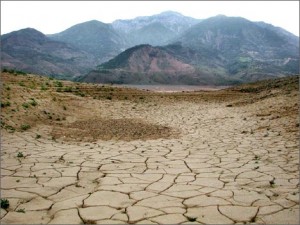
Climatic changes are actually happening and Earth is heating up, the glaciers melting and water is being consumed by the growing population.  S outh Asia is the most vulnerable region of the world as its population is growing far too quickly and the glaciers in the Himalayas depleting very quickly. For Pakistan, the bad news is that the River Indus is 30 to 40 per cent dependent on the Himalayan glaciers. It's not only Pakistan that has experienced record-breaking extreme weather events recently. In the last couple months extreme weather has struck around the world with startling ferocity. In addition to this the monsoon downpours were some of the heaviest seen in recent years. Flooding in Indonesia, drought in South and North Korea, land slides due to heavy rain in Bangladesh.Meanwhile shifts in glacial melt and rainfall are threatening crops and water scarcity in Pakistan is of great concern. Monsoon patterns have mainly disturb severely disturbed by these globa...

Attention Please! Dengue season is coming back

Image
Dengue fever is caused by one of four different but related viruses. It is spread by the bite of mosquitoes, most commonly the mosquito Aedes aegypti , which is found in tropic and subtropic and the Caribbean regions , usually during the rainy seasons in areas with high numbers of infected mosquitoes.Asia-Pacific countries have more than 70% of the disease burden.Dengue fever can be caused by any one of four types of dengue virus: DEN-1, DEN-2, DEN-3, and DEN-4. A person can be infected by at least two, if not all four types at different times during a life span, but only once by the same type. Dengue fever begins with a sudden high fever, often as high as 104 - 105 degrees Fahrenheit, 4 to 7 days after the infection.A flat, red rash may appear over most of the body 2 - 5 days after the fever starts with intense headache, joint and muscle pain and a rash. Mild bleeding of the nose or gums may occur.. A second rash, which looks like the measles, appears later in the d...

The slow acting poison of plastic

Image
Man-made plastic has been a boon in many ways and has countless uses, but it is also an environmental time-bomb waiting to explode. These plastics do not decompose easily and, hence, lead to countless health and environmental hazards when disposed of carelessly. Burning of plastic bags and items leads to the creation of noxious fumes, such as carbon monoxide. The increase in the effusion of this gas has led to an upsurge in various respiratory ailments such as asthma and bronchitis. The noxious fumes have also had an injurious effect on the ozone layer, which prevents the harmful rays of the sun from flowing into the atmosphere. Plastic bottles, plastic bags and food packaging are responsible for most of our plastic waste and environmental concerns. Statistics show that we are consuming more and more plastics every year. It is estimated that an average individual uses around 130 plastic bags per year. One of the most common chemicals in plastics is Bisphenol A; more...

Collectivism can down global warming

Image
IN PAKISTAN, annual mean surface temperature has a consistent rising trend since the beginning of 20th century. Rise in mean temperature of 0.6-1.0°C in arid coastal areas, arid mountains and hyper arid plains, 10-15 per cent decrease in both winter and summer rainfall in coastal belt and hyper arid plains, 18-32 per cent increase in rainfall in monsoon zone especially the sub-humid and humid areas is observed. There is 5 per cent decrease in relative humidity in Baluchistan, 0.5 to 0.7 per cent Increase in solar radiation over southern half of country. In the above summarized drastic environmental changes are all due to the global warming because of insensibly usage of natural resources and in result of it production of pollutants that further causing irreversible changes to our mother land. We must adopt steps like other developed nations to reduce and further overcome these types of problems. In America, the National Green Week is the largest waste reduction campaig...

Poor Pak nation dupe of global warming, air pollution

Image
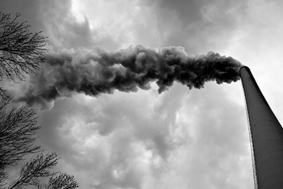
SOOT FROM diesel exhausts and the burning of wood, agricultural waste and dung for heating and cooking causes an estimated two million premature deaths a year, particularly in the poorest countries. Scientists say that concerted action on these substances can reduce global temperatures by 0.5 degrees Celsius by 2050 and prevent millions of cases of lung and heart disease by 2030. There is no way to effectively address a climate change without reducing carbon dioxide, the most dangerous, prevalent, and persistent greenhouse gas. It stays in the atmosphere for hundreds of years. The year 2012 is expected to be around 0.48 °C warmer than the long-term (1961-1990) global average of 14.0 °C, with a predicted range of between 0.34 °C and 0.62 °C, according to the Met Office annual global temperature forecast. The middle of this range would place 2012 within the top 10 warmest years in a series which goes back to 1850. Greenhouse gases can stay in the atmosphere for an amount of years ra...

Noise pollution, perpetrator of many health problems

Image
Noise has become a very important "stress factor" in the environment of man. The term "noise pollution" has been recently used to signify the hazard of sounds which are consequence of modern day development, leading to health hazards of different type. Continuous exposure to high decibel noise can result in some adverse effects on your health. One of these hazards is acoustic trauma to the ears caused when they are subjected to the sound of an intensity of 85 dB or more without respite. The health hazards of noise pollution can be categorized into physiological and psychological hazards. While the former includes hearing loss, hypertension, disturbance in sleep patterns etc., the later includes problems such as annoyance, aggression and stress.  According to a medical health guide lines, although high levels of noise for short time can lead to noise induced hearing loss early but usually 10 years of exposure is generally required for significant hearing loss to oc...
Image
Asia, located primarily in the eastern and northern hemispheres, is the world’s largest and most populous continent, Population of Asia 2011 is 3,879,000,000 (3.8 billion). It covers 8.6% of the Earth’s total surface area (or 29.9% of its land area) and with approximately 4 billion people, it hosts 60% of the world’s current human population, But only about 36 percent of the renewable fresh water. So, even on a continental scale, it is clear that water is a serious constraint in Asia. China, India and Pakistan are three of the four top irrigators in the world, suffering with serious water problems. Pakistan has in most areas of agriculture a monsoon climate, and there might be abundant rainfall during the wet season and then a very long dry season where crop production depends very heavily on irrigation water. Groundwater is a very important source of irrigation for farmers. Ground water is being over-pumped extensively in order to meet current demands for food production but if ou...

A Small Effort by Each of Us Will Make A Big Difference

Image
In Pakistan, the annual mean surface temperature has been  consistently rising trend since the beginning of 20th century. The rise in mean temp. has been  of 0.6-1.0°C in arid coastal areas, arid mountains and hyper arid plains, and there has been a 10-15% decrease in both winter and summer rainfall in the coastal belt and hyper arid plains. There has been an 18-32% increase in rainfall in the monsoon zone especially the sub-humid and humid areas. There is a 5% decrease in relative humidity in Baluchistan, 0.5 to 0.7% Increase in solar radiation over the southern half of the country. These  drastic environmental changes are all due to global warming because of our wasteful  usage of natural resources and an increase in  pollutants that are further causing irreversible changes to our mother land. We must adopt steps like other developed nations to reduce and further overcome these types of problems. In America the National Green Week is the largest waste red...

AquaPonics: latest environmental and climate friendly way of gardening

Image
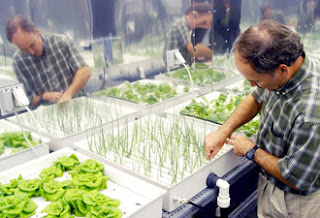
Aquaponic is a combination of two words, Aqua – water and Ponics-Farm in a box. “Aquaponics an environmentally-friendly, natural food growing method to facilitate the cultivation of fish and plants together in a constructed, re-circulating ecosystem utilizing natural bacterial cycles to convert fish wastes to plant nutrients. “So it is also called as recirculation farming. Recirculation farms are a socially responsible farming method and business too; they support the use of renewable energy, recycle water and waste, and provide local food. Aquaponic systems are much more productive and use up to 90 percent less water than conventional gardens. Other advantages include no weeds, fewer pests, and no watering, fertilizing, bending, digging or heavy lifting etc. there are different types of aquaponic like Media Bed - (using a substance such as lave rocks or other medium other than soil for raising plants and bacteria) Raft - (using foam boards with cut outs to place planter pots floati...