Posts

Showing posts with the label population

Hot, humid and sweaty weather to nice, breezy and showery...Another monsoon spell

Image
  Weather of Pakistan  is expecting another good spell of monsoon rain after very hot, humid and sweaty period. PMD (Pakistan Meteorological Department ) has informed that the “second spell of monsoon rains is expected in coming 24 hours, travelling through the Arabian Sea and Bay of Bengal, has made its way into the north-eastern parts of the country.” Rainfall is expected to match the long-term average to slightly more in northern half of Pakistan. Good rainfall spell are expected during the 2nd and 3rd decade of the month, which may cause urban flooding and flash floods in some parts of the country. According to the spokesperson of meteorological department, the monsoon with gusty winds and thunder splash will lash isolated places in Malakand, Hazara, Rawalpindi, Gujranwala and Lahore divisions, Islamabad, Gilgit-Baltistan, and Azad Kashmir regions from 13th to 15th July. “Seasonal Low lies over North Baluchistan on 14th and 15th July with its trough extending sou...
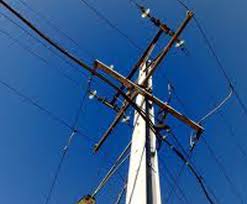
Alternative power: Save the economy and the environment

Image
Pakist­an needs to shift to enviro­nment-friend­ly energy. Pakistan must adopt other technologies for generating power from renewable energy sources, such as municipal waste and landfill methane geothermal recovery, anaerobic biomass gasification, biological fuels, fuel cells and ocean waves. It is no secret that Pakistan is in the grip of a serious energy crisis that is affecting all sectors of the economy and various segments of society. Luckily Pakistan is also blessed with many resources but the government has not focused on alternative energy to the extent that it should, so far. For years, the matter of balancing Pakistan’s supply against the demand for electricity has remained a largely unresolved matter. And it is a separate issue that Pakistan faces a significant challenge in revamping its distribution network as well. A lot of problems arise out of the fact that Pakistan’s energy infrastructure is neither well developed nor well managed. The mismanagement can be gauged from...

Pakistan -Living Under the Black-Outs Because of Insufficient Electricity

Image
Pakistan is under black-outs due  not just because of terrorism, corruption, and inflation. No, mostly it’s  because of electricity and gas shortages and this in long run affects every sector of life which you can imagine. Natural disasters like The Great Earthquake and Flood-2010 have negatively affected our growth rate and a number of energy plants were partially or completely damaged. About 1.4 billion people today lack access to electricity, and current trends indicate that this will not change significantly by 2030. It is also estimated that 2.5 billion people will still use traditional biomass for cooking in 2030, with related health effects leading to 1.5 million premature deaths per year, mostly among women and children. The blame game about electricity and gas shortages is on full throttle here . Some blame the current Pakistani leadership thinking it has only happened recently. Today, Pakistan is in a severe energy crisis   Figure 1: Electricity Status of P...

Asian Countries Face the Greatest Risk from Severe Climate Change

Image
s Ban Ki Moon said in September 2007  “ Given the nature and magnitude of the challenge, national action alone is insufficient. No nation can address this challenge on its own. No region can insulate itself from these climate changes. That is why we need to confront climate change within a global framework, one that guarantees the highest level of international cooperation” Asian countries including Pakistan face the greatest risk from severe climate change, which could force millions of people to flee their homes and trigger environmental migration, according to an Asian Development Bank report. The report titled "Climate Change and Migration in Asia and the Pacific" says Bangladesh, India, Maldives and Pakistan face the greatest risk, but Indonesia, the Philippines, Thailand, Vietnam, Japan, China and South Korea are also especially vulnerable. Public opinion in  Pakistan in recent years has largely disapproved of how the Government of Pakistan totally ignor...

Lack of Government Will, Useless Climate Debate and Loss of Biodiversity

Image
The United Nations has launched the Decade on Biodiversity with Secretary-General Ban Ki-moon urging humanity to live in harmony with nature and to preserve and properly manage its riches for the prosperity of current and future generations. It is now widely recognized that climate change and biodiversity are interconnected. Biodiversity is affected by climate change, with negative consequences for human well-being, but biodiversity, through the ecosystem services it supports, also makes an important contribution to both climate-change mitigation and adaptation. After extended negotiations in Durban , the 194 parties to the UN Framework Convention on Climate Change (UNFCCC) agreed on a package of decisions, known as the Durban Platform, which include the launch of a protocol or legal instrument that would apply to all members, a second commitment period for the existing Kyoto Protocol and the launch of the Green Climate Fund. The 194 countries negotia...

Public Attitudes Toward Climate Change Across Countries

Image
From the World Bank commissioned report in 2009: “Public attitudes toward climate change: findings from a multi-country poll”,comes this interesting look at country wide attitudes to climate change. So it's interesting to look at how these views affected country attitudes at Durban recently. It is pertinent to mention here that Asia has been worst hit by severe climate change.  Pakistan is one of the countries that have been severely hit in the recent years by disastrous effects of climate change including flash floods and devastating earthquakes. “Developed nations are not guilty of causing the climate change that developing nations claim they are suffering,” said Tom Harris, executive director of ICSC which is headquartered in Ottawa, Canada. “Climate changes all the time—both warming and cooling—due to natural causes and there is nothing that we can do to stop it. However, to the degree possible, and considering our economic circumstances, developed nations stil...

Pakistan and National Geographic Society’s Geography Awareness Week.

Image
November 13-19 was the National Geographic Society’s Geography Awareness Week. This year’s theme is The Adventure in Your Community. Geography is all around us and varies from region to region in the Pakistan. Did you know that geography and weather are very closely linked? Mountains and Rivers can influence an area’s climate by affecting both temperature and precipitation. As elevation increases, the Atmosphere becomes less dense. When it is less dense, its ability to absorb and hold thermal energy is reduced and temperature gets lower. Rivers and seas also help the climate in cooling and absorption of heat waves. Climate change is likely to have a profound effect on human societies around the World. Over the past decades much effort has concentrated on the physical science behind climate change. With the general acceptance of anthropogenic climate change, emphasis has recently shifted towards climate change impacts, adaptation and mitigation. Explore some of the conne...