Posts

Showing posts with the label Sindh

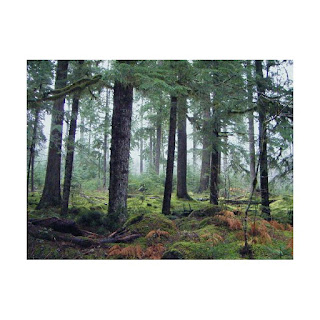
Afforestation: best buffers in terms of negative impacts of climate change -by- Naseem Sheikh
Image
Afforestation is one of the best buffers in terms of negative impacts of climate change in the world. Prime Minister, Imran Khan, appeals to all Pakistanis, especially school children that everyone should plant two trees on 18th August to celebrate "Plant4Pakistan day" across Pakistan. more than 22 million plants will be planted across Pakistan today. According to the World Wildlife Fund’s (WWF) 2017 survey, only 5.7% of Pakistan’s land was covered by forest. The report added that Pakistan lost up to 43,000 hectares of forest every year from 2000 to 2010. This is the highest deforestation rate among Asian countries. The federal government has estimated a one per cent increase in forest area in the country from the Billion Tree Tsunami The forestation project would require a funding of Rs. 125 billion for the first phase and will provide green cover to around 0.8 million hectares of land. As per the proposal, around 4.5 billion saplings will be planted in the country du...

Climate of Islamic Republic of Pakistan

Image
The climate of a region or country is known through the typical weather over a protracted amount of time. If a vicinity has a lot of dry days throughout the year than wet days, it'd be delineate as a dry climate; an area that has additional cold days than hot days would build it far-famed to own a chilly climate. Pakistan has four seasons: a cool, dry winter from December through February; a hot, dry spring from March through May; the summer season, or southwest monsoon amount, from June through September; and also the withdrawing monsoon amount of October and November. The weather extremes in Islamic Republic of Pakistan embody high and low temperatures, heaviest precipitation and flooding. the best temperature ever recorded in Islamic Republic of Pakistan is fifty three.5 °C(128.3 °F) that was recorded in Mohenjo-daro, Sindh on twenty six might 2010. Disaster state global climate change is probably going to increase climate-related natural disasters with the ...

Hot, humid and sweaty weather to nice, breezy and showery...Another monsoon spell

Image
  Weather of Pakistan  is expecting another good spell of monsoon rain after very hot, humid and sweaty period. PMD (Pakistan Meteorological Department ) has informed that the “second spell of monsoon rains is expected in coming 24 hours, travelling through the Arabian Sea and Bay of Bengal, has made its way into the north-eastern parts of the country.” Rainfall is expected to match the long-term average to slightly more in northern half of Pakistan. Good rainfall spell are expected during the 2nd and 3rd decade of the month, which may cause urban flooding and flash floods in some parts of the country. According to the spokesperson of meteorological department, the monsoon with gusty winds and thunder splash will lash isolated places in Malakand, Hazara, Rawalpindi, Gujranwala and Lahore divisions, Islamabad, Gilgit-Baltistan, and Azad Kashmir regions from 13th to 15th July. “Seasonal Low lies over North Baluchistan on 14th and 15th July with its trough extending sou...

Pakistan -Living Under the Black-Outs Because of Insufficient Electricity

Image
Pakistan is under black-outs due  not just because of terrorism, corruption, and inflation. No, mostly it’s  because of electricity and gas shortages and this in long run affects every sector of life which you can imagine. Natural disasters like The Great Earthquake and Flood-2010 have negatively affected our growth rate and a number of energy plants were partially or completely damaged. About 1.4 billion people today lack access to electricity, and current trends indicate that this will not change significantly by 2030. It is also estimated that 2.5 billion people will still use traditional biomass for cooking in 2030, with related health effects leading to 1.5 million premature deaths per year, mostly among women and children. The blame game about electricity and gas shortages is on full throttle here . Some blame the current Pakistani leadership thinking it has only happened recently. Today, Pakistan is in a severe energy crisis   Figure 1: Electricity Status of P...

Disappointment Over Lack of Action in 2011 Needs to Be replaced with Hope of Action in 2012

Image
Pakistan is one of the countries that contributes least to global climate change but, nevertheless, it has played a leading role in trying to formulate global consensus on cooperating to address it .Also, the country is cognizant of its development priorities and is actively seeking both financial and technological suppor, to place its undeniable future growth on to a low carbon trajectory. Global deforestation and degradation accelerated climate change and to counter this, initiatives such as Reduced Emission from Deforestation and Degradation (REDD) was important as an alleviation response. The United Nation Framework Convention of Climate Change (UNFCC) was adopted in 1992 and Pakistan was one of its signatory along with 194 other nations. The study, by researchers at the University of California, Merced, concluded that rising temperatures associated with climate change could result in many more severe forest fires in the coming decades. Professor Anthony Westerling and his tea...

2011 Impact of Climate Change on Pakistan is Massive and disappointing

Image
Throughout 2011 we have seen  some of the extreme weather effects of climate change stinging. Global warming means killer storms more worse than Katrina and Gustav, unexpected flooding in Asia, drought in Eastern Europe, unseasonal heavy rains in western Africa. These events  have also reduced crop yields, further hampering the chances of relief. 2012 will also be the first year in which the world has had 7 billion mouths to feed throughout all 12 months. But drought in Eastern Europe this winter has affected the grain harvest raising prices and lowering hopes for famine relief in Africa. Global warming is causing the melting of glaciers in the Himalayas. In the short term, this means increased risk of flooding, erosion, mudslides and GLOF in Nepal, Bangladesh, Pakistan, and north India during the wet season. Because the melting of snow coincides with the summer monsoon season, any intensification of the monsoon and/or increase in melting is likely to contribute to flood d...

Pakistan and National Geographic Society’s Geography Awareness Week.

Image
November 13-19 was the National Geographic Society’s Geography Awareness Week. This year’s theme is The Adventure in Your Community. Geography is all around us and varies from region to region in the Pakistan. Did you know that geography and weather are very closely linked? Mountains and Rivers can influence an area’s climate by affecting both temperature and precipitation. As elevation increases, the Atmosphere becomes less dense. When it is less dense, its ability to absorb and hold thermal energy is reduced and temperature gets lower. Rivers and seas also help the climate in cooling and absorption of heat waves. Climate change is likely to have a profound effect on human societies around the World. Over the past decades much effort has concentrated on the physical science behind climate change. With the general acceptance of anthropogenic climate change, emphasis has recently shifted towards climate change impacts, adaptation and mitigation. Explore some of the conne...