Posts

Showing posts with the label earth soil and land scape

Peatlands trap carbon dioxide, even during droughts

Image
Although peatlands make up only 3 percent of the Earth’s surface, they store one third of the soil carbon trapped in soils globally. Preserving peatlands is therefore of paramount importance for mitigating climate change, provided that these vulnerable environments are not themselves threatened by global warming. To better determine this risk, two French scientists, including Vincent Jassey, a CNRS researcher at the Laboratoire Ecologie Fontionnelle et Environnement (CNRS/Université Toulouse III—Paul Sabatier/INP Toulouse), studied carbon uptake by the two main species of moss that make up the Le Forbonnet peatland in Frasne (Jura). They discovered that when temperatures were high and also during droughts, the two Sphagnum species behaved in opposite ways: Sphagnum medium resists drought, whereas the photosynthesis of Sphagnum fallax is negatively impacted; conversely, in very hot but humid weather, photosynthesis, and thus carbon uptake, in Sphagnum fallax increases, whereas t...
Image
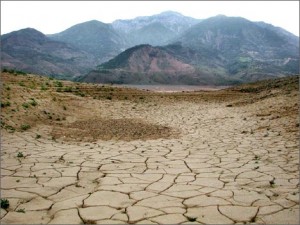
Asia, located primarily in the eastern and northern hemispheres, is the world’s largest and most populous continent, Population of Asia 2011 is 3,879,000,000 (3.8 billion). It covers 8.6% of the Earth’s total surface area (or 29.9% of its land area) and with approximately 4 billion people, it hosts 60% of the world’s current human population, But only about 36 percent of the renewable fresh water. So, even on a continental scale, it is clear that water is a serious constraint in Asia. China, India and Pakistan are three of the four top irrigators in the world, suffering with serious water problems. Pakistan has in most areas of agriculture a monsoon climate, and there might be abundant rainfall during the wet season and then a very long dry season where crop production depends very heavily on irrigation water. Groundwater is a very important source of irrigation for farmers. Ground water is being over-pumped extensively in order to meet current demands for food production but if ou...

Pakistan -Living Under the Black-Outs Because of Insufficient Electricity

Image
Pakistan is under black-outs due  not just because of terrorism, corruption, and inflation. No, mostly it’s  because of electricity and gas shortages and this in long run affects every sector of life which you can imagine. Natural disasters like The Great Earthquake and Flood-2010 have negatively affected our growth rate and a number of energy plants were partially or completely damaged. About 1.4 billion people today lack access to electricity, and current trends indicate that this will not change significantly by 2030. It is also estimated that 2.5 billion people will still use traditional biomass for cooking in 2030, with related health effects leading to 1.5 million premature deaths per year, mostly among women and children. The blame game about electricity and gas shortages is on full throttle here . Some blame the current Pakistani leadership thinking it has only happened recently. Today, Pakistan is in a severe energy crisis   Figure 1: Electricity Status of P...

Asian Countries Face the Greatest Risk from Severe Climate Change

Image
s Ban Ki Moon said in September 2007  “ Given the nature and magnitude of the challenge, national action alone is insufficient. No nation can address this challenge on its own. No region can insulate itself from these climate changes. That is why we need to confront climate change within a global framework, one that guarantees the highest level of international cooperation” Asian countries including Pakistan face the greatest risk from severe climate change, which could force millions of people to flee their homes and trigger environmental migration, according to an Asian Development Bank report. The report titled "Climate Change and Migration in Asia and the Pacific" says Bangladesh, India, Maldives and Pakistan face the greatest risk, but Indonesia, the Philippines, Thailand, Vietnam, Japan, China and South Korea are also especially vulnerable. Public opinion in  Pakistan in recent years has largely disapproved of how the Government of Pakistan totally ignor...

Can Synthetic Trees Be a Substitute for Real Ones in CO2 Absorption ?

Image
The Earth’s temperature is rising. We can argue about whether it is a short-term or long-term trend, or whether it is natural variation or man-induced, but it is warming. But now it’s our duty to pay something to cure our mother earth. A normal person helps it by just planting a tree because trees absorb Co2. But is there something we can do to absorb CO2 beyond trees. The idea of forming   synthetic tress  has been worked on for some  time by by Dr Klaus Lackner, of Columbia University.it is hoped that these "synthetic trees" will be able to collect and trap carbon about 1000 times faster than the real thing. Basically as the wind blows though plastic "leaves," the carbon is trapped in a chamber,compressed and stored as liquid carbon dioxide. The technology is similar to that used to capture carbon from flue stacks at coal-fired power plants, but the difference is that the "synthetic tree" can catch carbon at any place and at any time . A...