Posts

Showing posts with the label Baluchistan and Punjab

Afforestation: best buffers in terms of negative impacts of climate change -by- Naseem Sheikh
Image
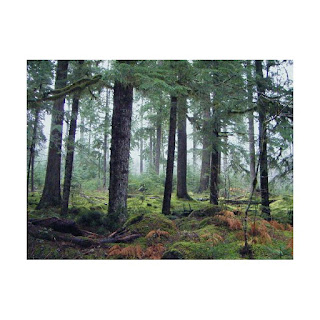
Afforestation is one of the best buffers in terms of negative impacts of climate change in the world. Prime Minister, Imran Khan, appeals to all Pakistanis, especially school children that everyone should plant two trees on 18th August to celebrate "Plant4Pakistan day" across Pakistan. more than 22 million plants will be planted across Pakistan today. According to the World Wildlife Fund’s (WWF) 2017 survey, only 5.7% of Pakistan’s land was covered by forest. The report added that Pakistan lost up to 43,000 hectares of forest every year from 2000 to 2010. This is the highest deforestation rate among Asian countries. The federal government has estimated a one per cent increase in forest area in the country from the Billion Tree Tsunami The forestation project would require a funding of Rs. 125 billion for the first phase and will provide green cover to around 0.8 million hectares of land. As per the proposal, around 4.5 billion saplings will be planted in the country du...

Climate of Islamic Republic of Pakistan

Image
The climate of a region or country is known through the typical weather over a protracted amount of time. If a vicinity has a lot of dry days throughout the year than wet days, it'd be delineate as a dry climate; an area that has additional cold days than hot days would build it far-famed to own a chilly climate. Pakistan has four seasons: a cool, dry winter from December through February; a hot, dry spring from March through May; the summer season, or southwest monsoon amount, from June through September; and also the withdrawing monsoon amount of October and November. The weather extremes in Islamic Republic of Pakistan embody high and low temperatures, heaviest precipitation and flooding. the best temperature ever recorded in Islamic Republic of Pakistan is fifty three.5 °C(128.3 °F) that was recorded in Mohenjo-daro, Sindh on twenty six might 2010. Disaster state global climate change is probably going to increase climate-related natural disasters with the ...

All environmental threats are antropogenic and that they can be solved by humans themselves.

Image
The environmental field has experienced a major transition in the past 20 years. Climatic changes are actually happening and Earth is heating up, the glaciers melting and water is being consumed by the growing population. The changing climate leads to changes in the frequency and timing of extreme weather and climate events, and can result in unprecedented extreme weather and climate events. Erik Solheim is the Executive Director of the UN Environment Programme (UNEP) since May 13, 2016. He has an extensive career focusing on environment and development in government and international organisations. In his first interview with The News on Sunday, Erik seemed hopeful to work with current government and further the conservation agenda in Pakistan. Regarding the environmental issues that Pakistan is grappling with, Erik Solheim stood clear that all these environmental threats are man-made and that they can be solved by humans themselves.   Pakistan ...

Pakistani heavy monsoon rain fall broke 38 years record

Image
The Lahore city and its surroundings continued to experience intermittent  heavy rain , which turned the weather pleasant after a months-long spell of heat .A total 252 millimeters of rain has been recorded in the city in the last 24 hours. However, the rain is still continuing to lash Lahore among other cities across Punjab. Pakistan heavy monsoon rain fall broke 38 years record and hopefully help in compensate the severe water shortage, lower mercury level and dry conditions. The country was facing worst water crisis since there have been no ‘good’ showers in the last five months along with two to three degree higher than normal temperatures. Mercury level at Lahore was first time hit to 50C . because of that dry  weather spell, dams around Islamabad were in critical situation. Therefore, the monsoon rains are being considered as a way out for addressing the current water scarcity situation. On Thursday, the Pakistan Meteorological Department said this ...

2011 Impact of Climate Change on Pakistan is Massive and disappointing

Image
Throughout 2011 we have seen  some of the extreme weather effects of climate change stinging. Global warming means killer storms more worse than Katrina and Gustav, unexpected flooding in Asia, drought in Eastern Europe, unseasonal heavy rains in western Africa. These events  have also reduced crop yields, further hampering the chances of relief. 2012 will also be the first year in which the world has had 7 billion mouths to feed throughout all 12 months. But drought in Eastern Europe this winter has affected the grain harvest raising prices and lowering hopes for famine relief in Africa. Global warming is causing the melting of glaciers in the Himalayas. In the short term, this means increased risk of flooding, erosion, mudslides and GLOF in Nepal, Bangladesh, Pakistan, and north India during the wet season. Because the melting of snow coincides with the summer monsoon season, any intensification of the monsoon and/or increase in melting is likely to contribute to flood d...

Pakistan and National Geographic Society’s Geography Awareness Week.

Image
November 13-19 was the National Geographic Society’s Geography Awareness Week. This year’s theme is The Adventure in Your Community. Geography is all around us and varies from region to region in the Pakistan. Did you know that geography and weather are very closely linked? Mountains and Rivers can influence an area’s climate by affecting both temperature and precipitation. As elevation increases, the Atmosphere becomes less dense. When it is less dense, its ability to absorb and hold thermal energy is reduced and temperature gets lower. Rivers and seas also help the climate in cooling and absorption of heat waves. Climate change is likely to have a profound effect on human societies around the World. Over the past decades much effort has concentrated on the physical science behind climate change. With the general acceptance of anthropogenic climate change, emphasis has recently shifted towards climate change impacts, adaptation and mitigation. Explore some of the conne...